Natural Language Processing (NLP)

How can natural language processing (NLP) be used to improve communication between humans and computers?

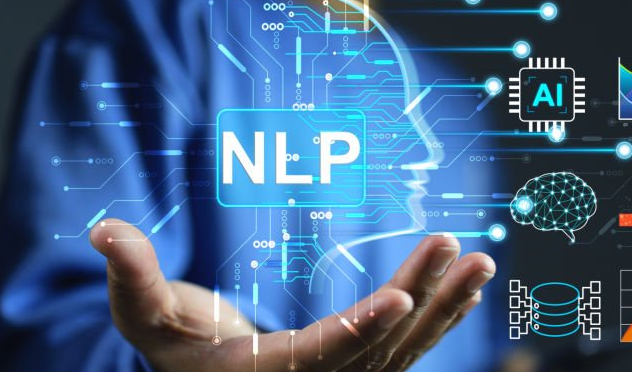
Natural Language Processing (NLP) can be used to improve communication between humans and computers. It enables computers to understand, interpret and generate human language. This allows humans to interact with computers more naturally and intuitively. Rather than having to rely on structured interfaces or programming languages.
NLP

Here are some ways NLP can be used to improve communication between humans and computers:

  1. Chatbots and Virtual Assistants: NLP algorithms can be used to develop chatbots and virtual assistants that can understand and respond to natural language queries. These systems can provide information, answer questions, and perform tasks such as booking appointments or ordering products.
  2. Voice Recognition and Speech-to-Text: NLP can be used to develop systems that can recognize and transcribe human speech into text. This allows people to interact with computers using their voice, rather than typing or clicking.
  3. Sentiment Analysis: NLP can be used to analyze the sentiment of the text. It allows computers to understand the emotional tone of a message. This can be useful in customer service, where computers can detect customer frustration and respond appropriately.
  4. Language Translation: NLP can be used to translate text from one language to another. It allows people to communicate with others who speak different languages.

Overall, NLP has the potential to make human-computer interaction more natural and efficient. It improves the user experience and enables more complex interactions with computers.

Similar Posts

  • Recommender Systems in AI

    Recommender systems are an important application of artificial intelligence (AI) that help users discover relevant items or content based on their preferences, interests, or behavior. Various domains, including e-commerce, entertainment, social media, and more, actively employ these systems, showcasing their widespread utilization. There are several approaches to building recommender systems, including collaborative filtering, content-based filtering,…

  • The Monte Carlo techniques

    Monte Carlo techniques are a class of computational methods used to approximate complex mathematical problems through random sampling. Instead of solving problems analytically, these techniques rely on generating random data to simulate various scenarios and estimate outcomes. They are particularly useful when exact solutions are difficult to obtain or when dealing with high-dimensional problems. Monte…

  • AI dangerous in future?

    The discussion about the potential dangers of artificial intelligence (AI) in the future is a complex and multifaceted issue that spans several domains, including technology, ethics, and social sciences. Concerns about AI range from specific risks associated with the deployment of current technologies to more speculative risks associated with future developments, particularly the possibility of…

  • Image Classification with CIFAR-10 dataset

    Image classification with the CIFAR-10 dataset is a popular task in computer vision and machine learning. The CIFAR-10 dataset consists of 60,000 color images (32×32 pixels) across 10 different classes, with 6,000 images per class. Performing image classification with the CIFAR-10 dataset involves several general steps and some important steps are here below:

  • What is Ensemble learning?

    Ensemble learning is a machine learning technique that involves combining multiple models, called base learners or weak learners. Using ensemble learning builds a more accurate and robust predictive model. The idea behind ensemble learning is that by combining the predictions of multiple models. The resulting ensemble model can achieve better performance than any individual model….

Leave a Reply

Your email address will not be published. Required fields are marked *